ServicesRoof Inspections
Roof Inspections in Silver Grove That Show You What the Storm Left Behind
After a hard wind or hailstorm, the worst part is not knowing. We check your roof from ridge to gutter, look in the attic, and show you photos of what we found. Then you decide the next step with real information in hand.
What a roof inspection tells you
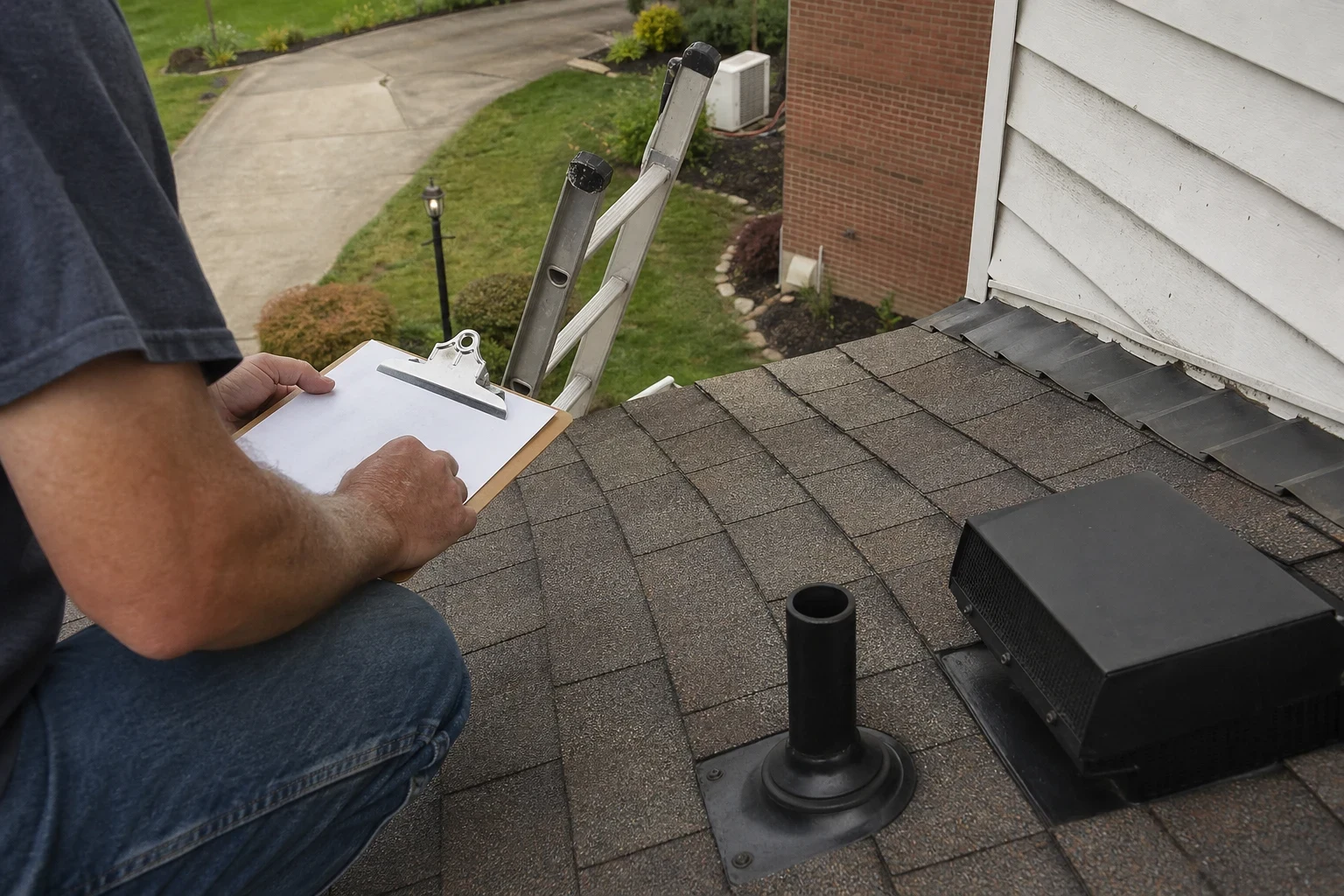
A roof inspection is a careful look at every part of your roof that keeps water out: shingles, flashing, vents, valleys, gutters and the attic underneath. We note what is fine, what is worn and what is damaged, and we photograph each item so you can see it for yourself.
It is the right call after a strong storm, when a stain shows up on a ceiling, or before you buy or sell a house. It also makes sense once a roof has a couple of decades behind it and you'd like a clear read on how many good years remain. Spring storms and winter freeze-thaw cycles in Northern Kentucky wear roofs down in ways you can't see from the driveway, and an inspection catches that wear while it is still a small fix.
The inspection is free. If everything checks out, we tell you so, and that is the end of it. If something needs work, we explain whether a repair will do or whether it is time to think about replacement, and we give you a free estimate you can take your time with.
What we look at, top to bottom
- Shingle condition
- Missing, creased or lifted shingles get noted, along with hail bruises and bald patches where the granules are gone. How that wear is spread across the roof tells us its age and whether a storm made it worse.
- Flashing and roof openings
- Chimneys, skylights, plumbing vents and wall joints are where most leaks start. At each one we look for metal that has pulled loose or rusted through and caulk that has cracked or shrunk away from the seam.
- Valleys and ridge
- Valleys carry the most water on a roof, and ridge caps take the most wind. Both get a close look.
- Gutters and drainage
- We make sure gutters are attached, sloped and draining, and that downspouts carry water away from your foundation. Clogged or sagging gutters can push water back under the roof edge.
- Attic and decking
- From inside the attic we look for daylight, damp insulation, water stains on the wood and signs of poor airflow such as frost or mildew on the underside of the roof.
- A photo report you keep
- You get the photos with a plain explanation of each item and what we would do about it, if anything.
Signs it's time for a roof inspection
A storm just passed
High wind, hail or a fallen limb can damage a roof without leaving anything in the yard. A look now beats finding out from a ceiling stain later.
Shingle pieces or grit in the yard
Shingle tabs in the grass or dark granules piling up at the bottom of downspouts mean the roof surface is wearing away.
Water marks inside
Yellowed spots on the ceiling, peeling paint near the top of a wall or an attic that smells stale after rain all point to water finding a way in. The real entry point is often several feet from where the mark shows.
Ice dams last winter
If thick icicles and ice ridges built up along your gutters, meltwater may have backed up under the shingles. That damage often shows up months later.
An older roof
Asphalt roofs tend to show their age after 15 to 20 years. An inspection tells you whether you have years left or should start planning.
How your inspection goes
- 1
A quick phone call
Tell us what you've noticed and when the weather hit. We set a time that works for you.
- 2
Walk-around on the ground
We start in the yard, looking at the roofline, gutters and siding, and at anything that came down from the roof.
- 3
Up on the roof
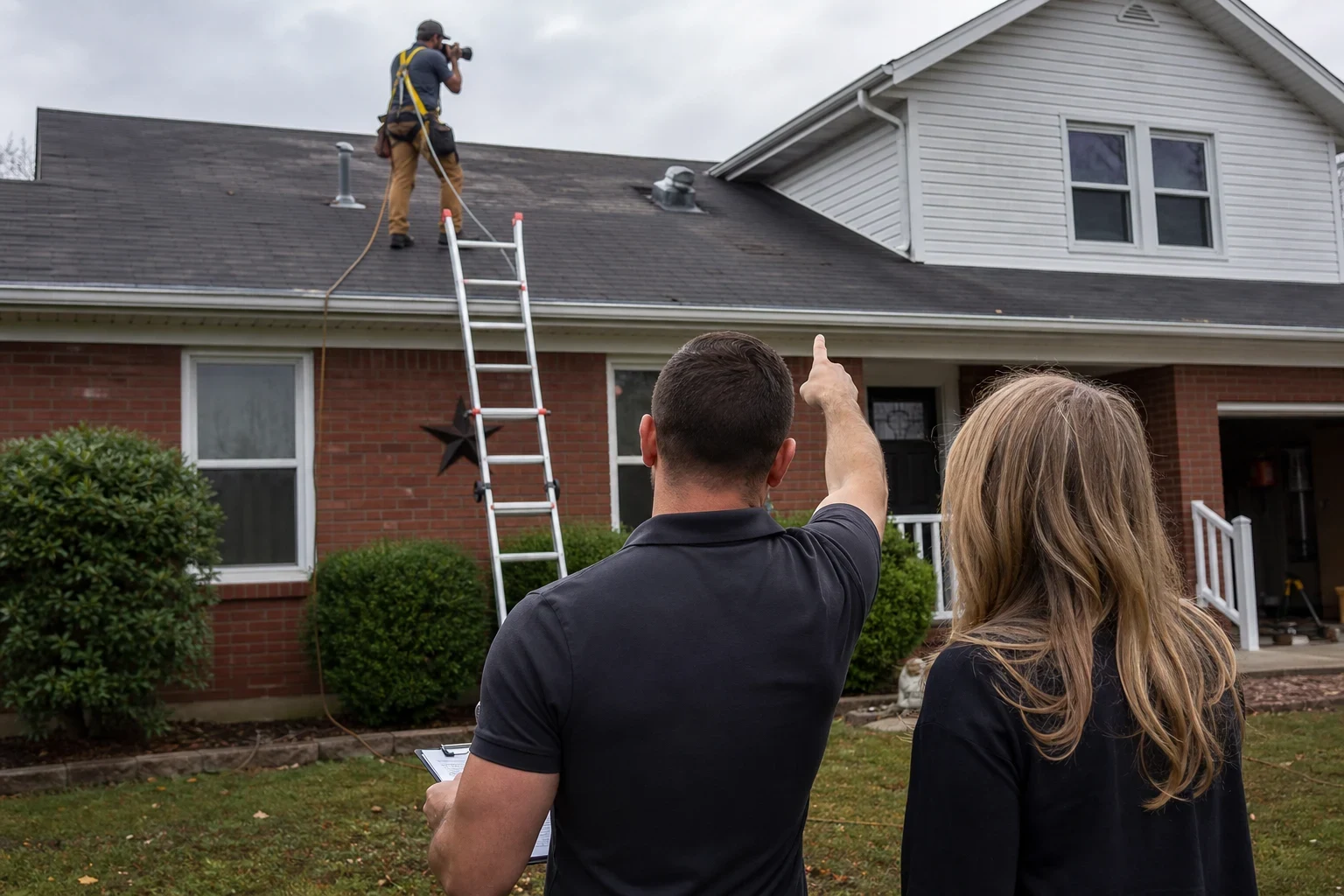
If it's safe to walk, we go up and check every slope, valley and opening, taking photos as we go. On steep or wet roofs we work from ladders at the edges and use zoomed photos instead of risking more damage.
- 4
Inside the attic
With your OK, we check the underside of the roof for leaks, airflow problems and soft decking.
- 5
Going over the findings
We walk you through the photos, explain what matters now and what can wait, and give you a free estimate if work is needed. If the damage looks like an insurance matter, we explain how claims usually go, though your adjuster makes the call on coverage.
What moves the price if repairs are needed
You pay nothing for us to look. A bill only comes into the picture if you choose to have work done, and the size of it depends on what we find up there. Here is what usually makes an estimate bigger or smaller.
- How much damage there is
- A few lifted shingles and a cracked vent boot make a small repair. Hail bruising across several slopes is a bigger job.
- What's under the shingles
- Soft or rotted decking has to be replaced before anything goes on top of it. We can only see part of it from the attic, so we tell you up front if the estimate could change once shingles come off.
- Pitch and access
- A steep slope or a two-story roofline means extra fall protection and a slower pace for the crew. Overhanging branches or wires close to the eaves can also make ladder setup harder, and that adds labor.
- Repair or replace
- When damage is spread across an aging roof, patching can cost more over time than a new roof. We lay out both options side by side so you can compare.
Roof inspection questions
Something not covered here? (859) 251-3557
Is the roof inspection really free?
Yes. We come out, inspect your roof and go over what we found at no charge. If you need work, the estimate is free too, and there's no pressure to schedule anything.
How long does an inspection take?
Most take around an hour. Larger or steeper roofs, or a cramped attic, can stretch that out. Let us know the size and style of your home on the phone and we can usually say how long to plan for.
Does someone have to be there while you inspect?
It's best if you are, since we need a way into the attic and it's easier to look at the photos side by side. If your schedule won't allow it, we can check the outside on our own and talk through everything with you by phone afterward.
Can you tell storm damage from normal wear?
Often, yes. Hail leaves round bruises where granules have been knocked loose, and wind lifts or creases shingles along a line. Ordinary aging looks more even across the roof. We point out which is which in the photos, which helps when you talk with your insurance company.
Should I contact my insurance company first?
Many people find it helps to have the inspection first, so they know whether there is damage worth a claim. We'll explain what we saw and how the process usually works, but your insurer decides what's covered.
Will you push me toward a new roof?
No. If a repair will do the job, we say so, and plenty of inspections end with good news. When a roof does need more, we show you why in the photos so the decision is yours.
Find out where your roof stands
If a storm came through or something just doesn't look right, a free inspection gets you answers and photos. We look at roofs in Silver Grove, Fort Thomas, Alexandria and the towns around them.